

Start an elearning business with one paid outcome
When a founder asks how to start your elearning business, the useful first choice is what a learner should be able to do by the end of the first programme. A catalogue, app and community can come later. A small paid cohort can test whether people will enrol, complete the relevant activity and return useful evidence before the team invests in a larger platform. Start with the outcome, who needs it and when they can commit time to practise. Give the instructor a way to observe the actual result. Use the revenue and operating evidence to decide which parts of the plan deserve expansion.
Consider North Elm Learning, a fictional training business that teaches guesthouse supervisors to plan a weekend shift handover. It offers a two-week paid cohort for twelve supervisors. They receive a short recorded introduction, attend two group sessions and submit a proposed handover for a fictional property with two conflicting service requests. The instructor reviews it using a known set of outcomes. Before the business builds custom functionality, it needs to see whether learners understand the problem, whether the delivery fits their schedules and whether the team can operate the programme at the proposed price. Scope the first version around these practical checks.
Separate the audience from an abstract market category
Write the type of supervisor who needs the material. The audience may already know how to check in guests but have never run a handover for a team of part-time staff. Identify an example trigger, such as a first weekend in charge, a promotion or a seasonal staffing change. Describe the time they can realistically give. Someone paying individually can behave differently from a manager purchasing several seats. Interview a few potential participants using the fictional handover, and ask what they already do when a request falls between shifts. Use their answers to refine the first objective and grade the clarity of the offer.
Ask whether the business will offer it to an individual, an employer or both. Someone in HR may ask for attendance information under an approved arrangement. A learner may want privacy for feedback. Use the correct contact and access responsibilities before you promise reporting. If an employer can replace a participant after enrolment, choose how the programme administrator records the change and what happens to earlier activity. Take that case into the pilot. It is easier to find a viable model with a few representative roles than to plan for every institution in the first quarter.
| Stage | Question | Evidence to review |
|---|---|---|
| Enrolment | Can the intended audience recognise and join the offer? | Eligible enquiries, accepted seat records and common questions |
| Delivery | Can participants attend and complete the Handover exercise? | Lesson access, submissions, mentor observations and requested help |
| Continuation | Can the team run another cohort with an improvement? | Actual staff effort, payment reconciliation, outcome checks and reviewed feedback |
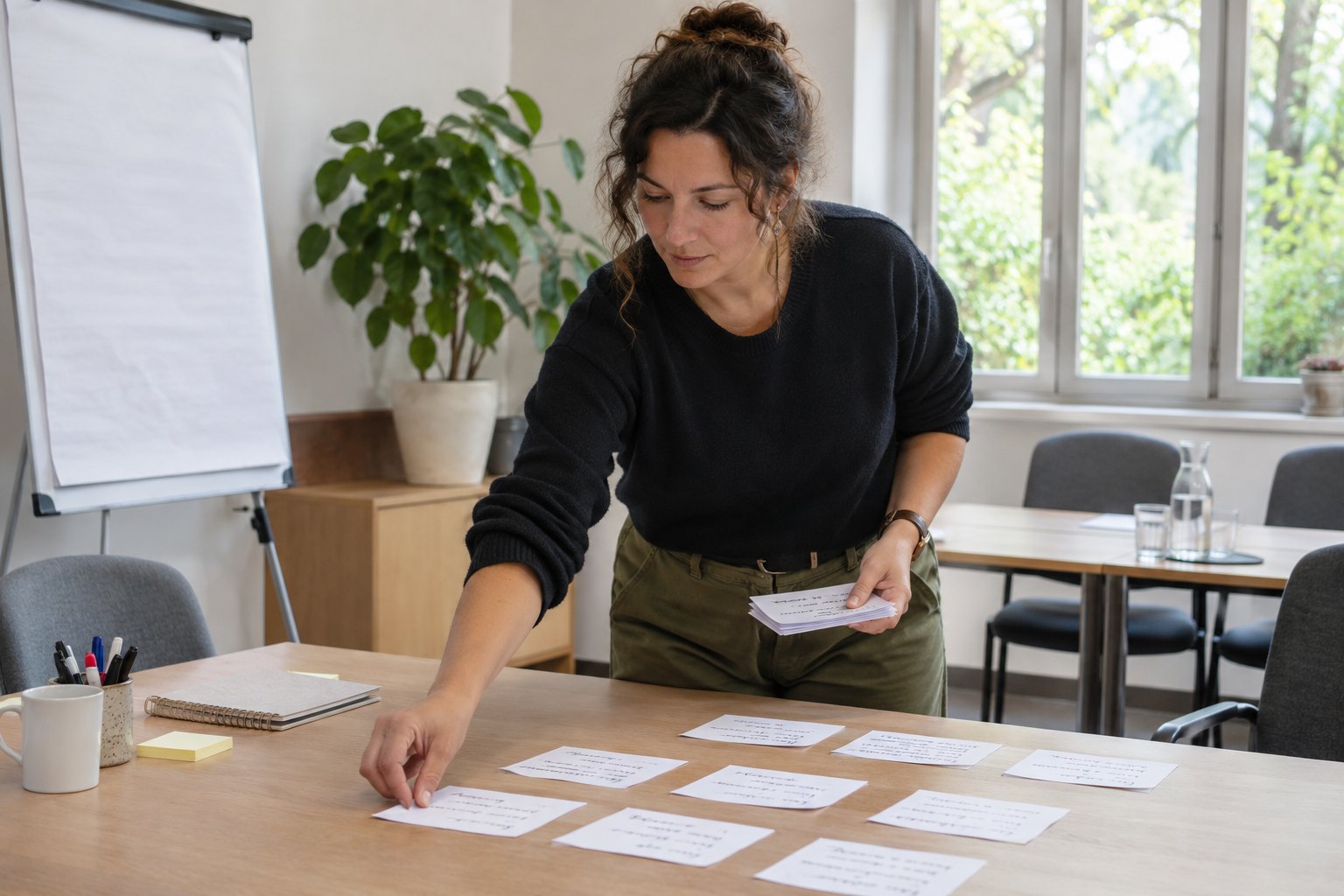
Decide what the learner does in each live and independent session
Start with the finished handover and work backwards. The learner can identify an urgent request, phrase the responsibility correctly and define what their colleague needs to know. An introductory video can explain the method. A live discussion can help learners compare two responses to an ambiguous situation. An independent task can show whether they apply the method to a different fixture. Plan how the instructor observes each action. Avoid filling a course outline with formats before deciding what the formats contribute. In the pilot, give participants a single recognised route to find each session and submit their exercise.
Check the work with two participants who have different schedules. One can attend both live sessions. The other can only attend one and will read the available material afterward. Decide what can be delivered asynchronously and what needs real conversation with the instructor. Write the arrangement in language someone can understand before paying. If the latter learner follows a different path, establish equivalent evidence for an appropriate assessment rather than treating a recording as attendance. Budget time to prepare, lead and review each format. The programme can start with the work staff can reliably support.
Build the accessible content and learner route early
The W3C guidance for accessible audio and video covers planning media with appropriate captions, transcripts and related accessibility considerations. Choose which formats will support the actual lesson, and verify the work with a short sample. A good transcript helps someone find a specific instruction later. In a handover demonstration, explanatory actions may need to be clear without relying on a visual cue alone. Use an instructor-owned review before publishing. Check course access and submit a fixture using the supported devices and input methods learners will use. Include accessible links, instructions and labels in the template from the start.
Prepare a scenario where a learner needs help finding the week-two exercise. The support worker can identify what was assigned, whether it was delivered and which respectful contact route is appropriate. The instructor can send the content through the agreed programme method if a link becomes unusable. Test a longer lesson title, an edited description and an unavailable live session. Keeping class communications straightforward will help the business learn how much effort it needs to support another cohort. An attractive home page alone cannot tell the team whether people can continue when they miss a session.
Give the pilot a transparent offer and operational model
Write what a paid seat buys. Include the number of sessions, access period, expected time between sessions, instructor review and any agreed recognition. Establish the company terms and local responsibilities through the appropriate business process. Use synthetic prices for planning until the owner approves the real offer. The cost model can include instructor preparation, live time, review, communications, payment handling and platform operation. Separate work that will be reused from work that repeats with each cohort. Ask the team to track actual effort against those categories during the trial.
A simple worked illustration might budget four hours to prepare recordings, two to lead each week, ten minutes to review each submission and one hour to resolve ordinary administration. The assumptions belong to the fictional team and should be replaced with observed work. Estimate the effect when attendance is lower or support questions take longer. Give the owner a planning rule that says which expenses vary with accepted seats. A small group can reveal useful support and teaching patterns without justifying a larger financial commitment by itself.
Find the capacity limit before accepting more participants
Run a short rehearsal with the maximum number of practice submissions the instructor expects in the first group. Look at how long it takes to apply the rubric and compose useful responses. Ask whether a second instructor would reach a substantially similar conclusion on the same sample. If review takes twice as long as planned, decide whether to adjust cohort size, clarify the exercise or reserve more of the budget. Write the accepted limit before taking more bookings. This connects the paid offer to an operating condition and gives the learner a more reliable expectation of feedback timing.
Check that support knows the right actions for a transfer, interrupted payment or an accepted change to a class date. A participant may ask to change the invoiced organisation or cannot find the latest session notice. Decide where status and evidence should be read. A seat record can show enrolment approval while the payment provider confirms the assessment of a payment separately. A change request should keep enough history to let the next employee see what was already offered. Include the administrative time in the cost model and confirm what the buyer sees after one of those actions takes place.
Try a minimal delivery environment before investing in custom software
List which features the programme needs to accept learners and teach safely. The first system may use a suitable platform with enrolment, lesson links and structured submission. Staff may use an approved operating route for anything the pilot cannot automate. Choose storage, account management and data handling decisions in line with company policy. Record which information has to move when one component changes. A participant should be able to find the applicable materials and the instructor should locate the relevant exercise. Review which of those behaviours the platform delivers without specialist configuration.
The 1EdTech Learning Tools Interoperability documentation covers a standard relevant when compatible platforms exchange approved launch or learning tool information. It can inform a later integration when the source and target actually support the intended functions. Plan from your own learning flow and vendor documentation. Confirm which platform controls identity, assignments and any accepted results. Do not add an integration merely to claim compatibility. Test that an authorised learner reaches the correct activity in the intended context. A pilot can use a simpler path while preserving the ability to evaluate a later integration.
Make one practice exercise fit the temporary setup
Use a fictional handover with one action that needs a reply before the shift ends and another that can wait. Ask the learner to submit a short response with the expected role and next decision. The instructor applies a short rubric. The feedback can say whether the important responsibilities were identifiable and which step needs practice. Preserve the course version used in the exercise. Test an edited submission and show how the instructor recognises the active one. This will reveal whether the learning technology needs revisions and how learners can recognise a corrected outcome.
Choose which submitted material can be used for future training with the appropriate permission and care. An instructor can create an entirely synthetic example if the programme needs a reusable case. Confirm what happens if a learner submits a link or additional data the course does not require. Use the organisation's operating policy to keep the necessary record and route issues. A small workshop can show a bigger platform problem. If staff cannot find the active review or discover who approved it, make that acceptance check explicit rather than treating a new content system as a complete solution.
Verify what the offer says before learners pay
Show the proposed landing page to representative supervisors. Ask them to explain who it is for, what they could demonstrably do at the end, when they must be available and what support they would receive. Test one person with an employer-funded seat and another buying separately. They should both be able to see the applicable purchase conditions and contact route. Where availability is limited, the business should show the actual pilot schedule. Verify payment using the platform's test or approved acceptance method and observe what evidence the learner receives afterward.
Try to register the thirteenth candidate when the fictional pilot holds twelve seats. Decide if they can join a waitlist, request another date or contact the team. Make the supported state clear to the person and give administrators a correct count. If the programme can open an approved new cohort, confirm who assigns the waiting seat. Verify the resulting notice and the record for the appropriate class. Track whether each participant received the invitation and has access to the right version of the exercise. If enrolment and lesson access live in separate tools, rehearse the point where those records meet.
Observe purchase, use and learning as separate outcomes
One learner may pay and never attend. Another may attend but skip the exercise. A third can submit a clear handover while taking the asynchronous path. Design the pilot report to represent these as separate facts. The business may want to understand where scheduling expectations or exercise instructions created friction. Write which period you observed and how the instructor and support staff counted actions. Avoid generalising from small numbers to a broader market. A cohort can give practical reasons to revise an offer and test it again. Report those observations with a description of who actually took part.
Ask instructors to review the evidence at a consistent point. Set a plan for late exercises and corrections. Use a measure the founder can interpret, such as whether the learner assigned both critical actions and named their next steps in the specific fixture. A completion badge could require broader checks in an eventual programme, under the terms approved by the organisation. Avoid claiming a qualification or employment outcome the pilot cannot establish. Show the outcome you tested and the one that remains a business decision.
Choose a continuation decision after the cohort
Plan three concrete choices after the trial. The team can repeat with a small revision, redesign part of the programme, or stop and investigate a different offer. Document which results would support each. A high number of enrolments with weak exercise outcomes may show an attractive promise but unclear teaching. Good outcomes for a group with high support costs may point to simplifying operations before scaling. A team can review the collected evidence with instructors and administrators. Write the reason for the decision and assign an owner to verify the next test.
Separate cash and service reporting. If a participant enrols in one week and pays or receives a reversal in another, use the approved accounting and source references for the business. Make support outcomes visible without exposing unrelated payment details to trainers. A business exercise can identify whom a learner contacts and which report can establish acceptance. Add any provider charges and recurring costs to a later calculation using the actual agreement. Give the owner a way to understand whether the programme can continue under the proposed operating schedule.
Design a second cohort around one changed assumption
Choose an ordinary problem in the first cohort. It might be that learners could only attend one live session, or that they needed a clearer example before submitting the task. Change one factor in the next pilot and observe the same handover outcome. Keep the same selection rule and comparison records where possible. If the offer moves to another audience, name that change in the results. Ask an instructor who did not set up the first group to run the revised sample. Consistency across staff will show whether the procedure is ready to be documented and repeated.
Bring the audience, price, actual schedule, lesson evidence, access requirements and support route into a simple project brief. Include a practical review after enrolment, one after exercises and one after the staff costs are known. Ask which parts of the first technology are sufficient and what should change if a larger class becomes viable. A founder can act on those decisions without promising a platform before the programme works. The aim is a paid lesson experience learners can enter, complete and evaluate under real conditions.
Prepare the next hiring or platform decision with operating examples
Use the programme as an example when comparing delivery partners. Ask them to enrol a synthetic learner, assign the lesson, capture feedback and produce an approved view of the assessment. Then ask what happens if the employer pays, if a learner joins a later session or if a recording has to be revised. A provider that answers clearly will show who handles each action and what a course administrator can configure. Review the audience and objectives before comparing extra features. A system that serves the same programme in several cohorts can often reuse the lesson and still maintain distinct schedules and participant records.
After that demonstration, record the work your team still needs to perform outside the tool. Identify an owner for each task and estimate how it changes for two cohorts running at once. One staff member may manage invitations and another reviews results. They should be able to locate the accepted course version and any changes in enrolment. Use a named learning outcome and observed exercise to decide whether extra automation or design effort will return value. Keep the test with the course plan. Replaying a real teaching task provides a concrete basis for the next business and platform decision.
Keep the business plan tied to work the team can repeat
After the first cohort, document the sequence from acceptance to feedback. Give a new administrator one fictional learner, a later class date and a normal change request. Ask them to find which seat is accepted, when the person receives access and how to pause an outdated invitation. This reveals whether a simple operation depends on one founder remembering the right link. Record the observed steps with owners and evidence. Include this training work in the next cohort estimate so the offer remains reliable as the team changes. A better process can often improve the business before more technology is commissioned.
Review how much of the programme the course owner can reuse. A session recording may remain useful, while the fictional handover could benefit from a revised case. An established assessment rubric can be reused with permission. Instructors may need a new observation if the programme changes audience. Choose which material needs an approval and how someone identifies the current version. If an older learner still uses a previous copy, staff should know the relevant access rules and where to find it. Include those needs when evaluating the delivery tools. They can change recurring administration work even when original production has already been paid for.
Plan a short review after each enrolment and teaching stage
Agree which results the founder will review before taking more reservations. A support lead can explain repeated buyer questions. An instructor can distinguish task misunderstanding from a schedule issue. The platform owner can identify failure to reach the correct assignment. Write the improvement with an explicit owner. Decide when someone can verify it in a clean test. Keep one accepted and one unresolved example from the first group. An early elearning business can grow from observing actual conditions, testing one change and deciding which risks the next group should help address.
Give the revised offer to someone who was not in the original meeting. Ask what is included, how a learner can get help and which outcome a future instructor will assess. Check their response against the approved practice. A clear answer makes enrolment easier to evaluate and provides a more accurate foundation for a second paid cohort.