
Use one order model from menu selection to delivery
When a product team wants to create a food delivery app, start with the commitments a diner, kitchen and courier must coordinate. A menu line may be visible while the kitchen cannot start another order. A payment can be authorized while the kitchen's decision remains unknown. A completed handoff can still leave the final drop unresolved. A single label such as active order cannot explain all three concerns. Give each actor an appropriate state and make important changes recoverable if the app closes or a partner response is delayed.
Consider Lantern Bowl, a fictional small kitchen with a one-zone delivery pilot. It sends prepared meals to addresses within service coverage, controls merchant acceptance through its kitchen portal and uses authorized couriers from a contracted dispatch partner. The pilot does not make universal assumptions about commercial terms or food safety. Its product scope is how an app documents requested choices, kitchen acceptance, dispatch and customer support. Its acceptance fixture uses imaginary amounts and clocks to show the decisions an implementation needs to prove.
Choose the actual operating model first. A single merchant controls its own menu and may prepare orders using a staff tablet. A marketplace might represent several merchants with different hours and strategies for order fulfillment. A business can collect payment or refer customers to a vendor that controls it. In each case agree which organization can confirm a dish, which accepts the charge and which can change the delivery decision. A mobile surface can present an integrated experience while underlying rights stay assigned to different operators.
Design what the kitchen can genuinely sell and prepare
Keep the menu, effective hours and preparation capacity distinct
A menu record needs an item, variant, guest-facing name, available customizations and current pricing. Some modifiers only apply to specific sizes or combinations. A lunch configuration may end at a defined time. Give the item its own identity and retain the actual terms the customer accepted. The current menu can change before an older order reaches dispatch. Its description should not rewrite that order. Staff need enough information to recognize which ingredients and customizations were ordered under the accepted conditions.
A menu opening schedule and a kitchen's ability to start another order are distinct signals. A lunch menu can be scheduled for 12:00 while a batch already assigned to staff prevents another order from starting in the quoted window. Capture how available preparation capacity is calculated, who can pause it and when an update becomes effective. Compare the capacity state with the advertised preparation period before a customer approves payment. Let an operator remove an item or pause ordering for a known reason. Test the source decision on an earlier installed app that still displays a cached menu.
Record published information regarding a specific menu item only from the authorized version. An item can have a policy entry or request note the customer needs to review. The pilot may show dietary labels provided by kitchen staff and forward notes under approved processes. The app should not infer that two dishes have the same attributes because their display names resemble each other. Give an authorized merchant a route to correct a listing and decide whether a significant change requires explicit buyer approval before continuing. Plan how customers get clarification where the app does not hold enough information.
Calculate a realistic promise before payment
Build an order quote from an explicit location, item versions, selected modifiers, relevant fees and expected fulfillment. An illustrative order with two 12-unit noodle bowls and a 4-unit delivery charge totals 28 units in the fixture. The agreement with the operator should name which taxes or fees affect the actual price and which are optional. The displayed checkout amount should match the accepted order version. Any new delivery term or unavailable option needs a clear updated proposal for customer review rather than a silent substitution.
Show the estimated window using the data actually available. Preparation, courier travel to the kitchen, an operational wait and travel to dropoff can each contribute. Some can happen in parallel. If a kitchen needs 18 minutes from the time of acceptance and the courier is estimated at 12 minutes from pickup, a simplistic 30-minute display ignores possible wait, pickup tasks and uncertainty. Document which estimates are combined and who reviews how they perform. Avoid promising a time where the dispatch service cannot assess the proposed route or the restaurant already sees a backlog.
Agree how an address or delivery mode changes the order. An entered address may be valid but outside an active zone. A customer collecting the same food might need a different checkout and handoff instruction. Do not assume changing a saved address just changes the text on the receipt. It can affect course of fulfillment, serviceability and price. Show which facts must be recalculated, request new approval when needed and retain the original decision on order history. Test a late address update after the kitchen began preparing a real fixture.
Separate kitchen acceptance from money movements
Define explicit order and payment states
Start with creation of a stable customer request. In the example a server submits order LB-650 to the kitchen for the previously reviewed choice. The payment attempt has an independent identifier and a recorded outcome. The business needs to decide what can begin while an authorization is pending, when to capture an approved amount and how to resolve the partner rejecting the request. A status label should say whether the customer needs to wait, review or try a new selection. Financial and operational states can be communicated separately where both matter.
The Stripe Payment Intents guide explains one provider's payment life cycle, including changing status and additional customer action. Its webhook documentation describes receiving asynchronous updates. These are examples for an implementation using that provider. Verify current account, currency and processing support before building the actual order decision. Link events to the same order attempt, authenticate provider callbacks using the documented mechanism and avoid using a client screen close as proof of failure or success.
An accepted order can coexist with an unresolved finance event. Define who can check provider records and how staff stop a duplicate request from creating a second charge. The order dossier should record when processing was attempted and when the outcome was confirmed. A person whose phone lost a reply can retrieve the pending operation using the same reference. Where the authorized route supports cancellation or release of an authorization, identify the exact eligibility and acknowledge the requested action without telling the customer it has finished until finance evidence confirms it.
Model prepared work that cannot simply be undone
A kitchen might allow cancellation while a request awaits acceptance and handle later requests through manual review. Write the supported behavior and the reason next to the relevant state. The customer can submit a request to change two bowls to one while preparation is underway, but their app should not pretend that the kitchen already agreed. Give operations a view of the recorded request and time at which actual fulfillment started. Any adjustment must consider the approved business rules and payment provider state. Confirm the result to the person who initiated it.
When an item becomes unavailable after request, display a recorded rejection or proposal from the kitchen. A kitchen employee might be able to offer an approved substitute using an online tool. In the pilot the requested two bowls cannot be prepared in the promised window, so the request is declined rather than silently changed to another dish. The customer sees the recorded decision and appropriate financial next step. The team can then measure out-of-stock and service-capacity rejections separately rather than treating them as a generic payment problem.
Use service agreements to decide how far to automate approval. A delay from the kitchen can justify an escalation or expiration, but it is not proof that every request was declined. Define a timeout policy and query route for cases where an accepted order reply never reached the app. Tests should interleave partner handling, cancel requests, payment outcomes and exit from the client. If conflicts need human resolution, make the case visible with enough information to act before the business expands traffic.
Join preparation, dispatch and delivery through a recoverable handoff
Choose a real pickup arrangement
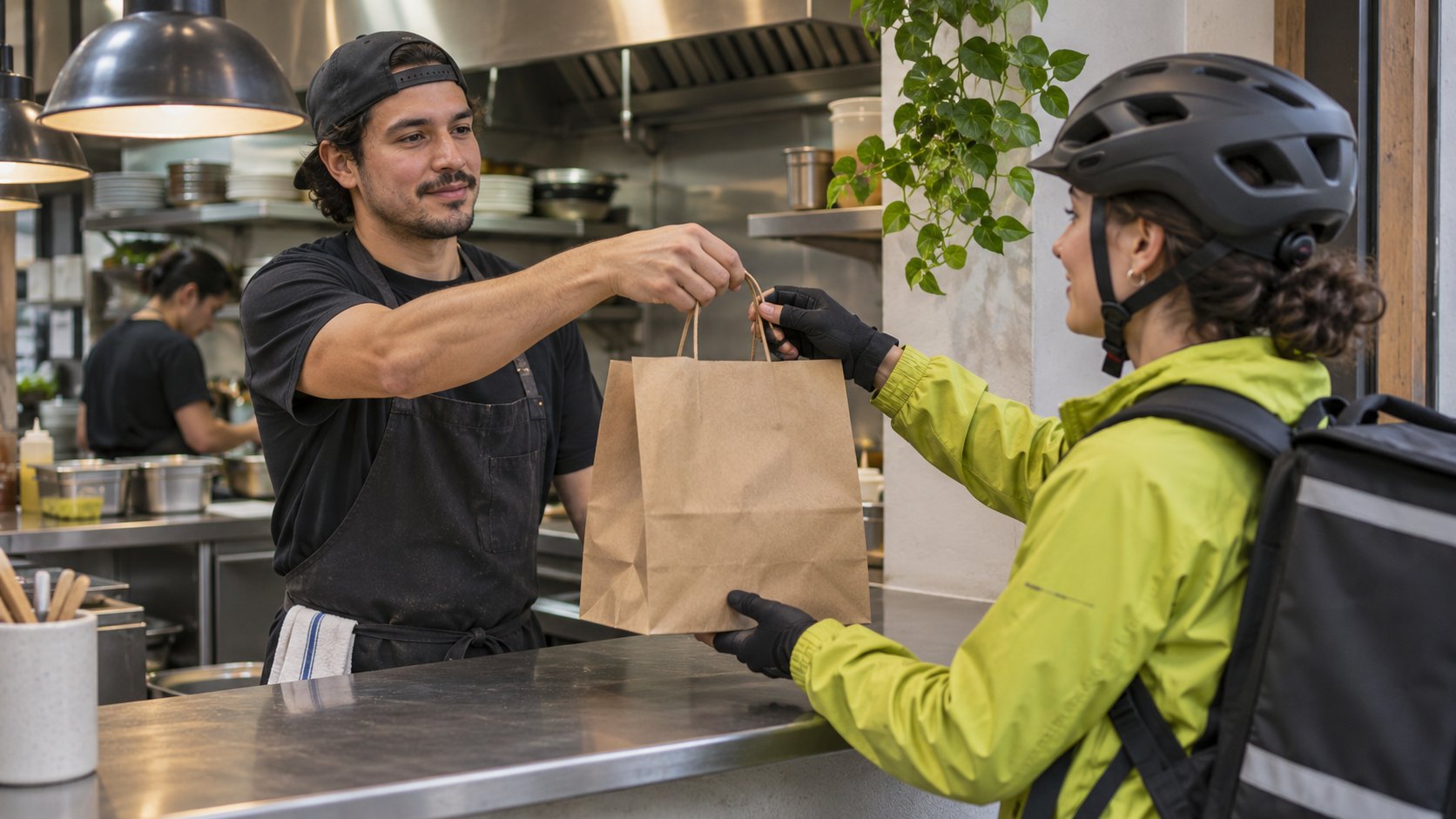
Attach a pickup task to the accepted order and keep courier assignment a distinct event. A future pickup can be scheduled before the kitchen marks ready if the agreed workflow supports it. Assigning too early can cause idle waiting. Assigning only after ready can extend the package's wait. Put the team's operating policy into a measured pilot that records accepted time, estimated readiness, actual ready time, arrival, pickup and delivery. Distinguish reported times from values inferred by ETA. The evidence helps a dispatcher decide what to change when expected delivery windows are missed.
The Google Maps Routes API documentation describes route computations for supported requests. A route estimate can inform dispatch when appropriate. It does not prove a courier accepted the work, that the kitchen finished the order or that pickup occurred. Keep assignment, readiness and custody signals attached to the actors who confirm them. Plan what the product reports if estimated travel cannot be fetched, and what independent instructions a confirmed courier receives about finding the pickup area.
Think through pickup evidence in the actual physical setting. A kitchen might prepare several orders to the same address area with similar customer names. Define which identifier a courier provides and which status the kitchen is allowed to mark. The platform can keep address and operational notes scoped to the active order. A replacement courier does not need all records from the former assignment. Confirm how reassignment revokes the old path and relinks it to current custody. Operations should know who can contact the customer without exposing an unrelated restaurant account.
Use a fixture with one interruption and one refusal
At 12:10 one customer checks out after seeing a 28-unit total. At 12:11 the payment operation records an authorization under the example's assumed method. The kitchen initially responds with a pending decision, then confirms LB-650 at 12:13. The diner sees acceptance and an updated delivery estimate. The sample policy allows captured payment after the agreed signal. Tests record the provider result separately. A courier assignment at 12:15 remains distinct from pickup at 12:29, after the kitchen marked the package ready at 12:27. The final drop is confirmed by the agreed partner process at 12:43.
In a second order LB-651, the same kitchen has paused new requests for capacity. The app receives a known refusal. The customer sees a clear explanation and can review available alternatives as a new decision. Their payment reference is checked for the appropriate action under the merchant's policy. Interleave cases so a support trainee can trace one accepted but not yet delivered order and one rejected but financially unresolved request. Separate escalation routes make the service easier to operate through a short rush.
| Stage | Owner | Proof and visible status |
|---|---|---|
| Customer quote | Checkout service | Menu snapshot and 28-unit amount ready for review |
| Authorization attempt | Payment provider and merchant | Recorded payment result, kitchen decision still independent |
| Kitchen accepts LB-650 | Kitchen operator | One accepted work order and current expected readiness |
| Courier assigned | Dispatch partner | Current assignment, no pickup yet |
| Pickup then dropoff | Kitchen and courier under agreed workflow | Distinct custody and delivery reports |
| LB-651 declined | Kitchen operator | Reason, correction choices and recorded finance follow-up |
Give the support team a path through an unresolved delivery
A courier may report an inaccessible address or an unanswered door. Agree what the app can ask the customer to do, how long a case can remain open, and who can change the next step. A failed contact attempt is not delivery. The support person should see the relevant order timeline and only the private data their role needs. Give the customer a way to find current status even after denying nonessential notifications. A refund or replacement order requires independent approval and evidence to prevent the system from using the wrong remedy automatically.
Record why a delivery estimate changes and how the person learns about it. An arithmetic model can shift the estimate after a courier reassigns, while the exact pickup instructions stay the same. If a route observation disappears, the product can communicate the known status and uncertainty instead of redrawing a precise progress marker using stale data. Separate internal monitoring of locations from what the customer needs to see and share. A model that can only suggest a route is still useful when the handoff states honestly represent what was recorded.
Prepare the launch with operations and support
Verify the merchant and courier interfaces under use
Run a normal kitchen acceptance using the tablet or portal expected during peak hours. The earliest action should be obvious with interruptions and a queue of other work. Confirm that an audible or visible prompt supports the team's workflow and a missed prompt does not drop the request silently. Test an operator signing into the wrong location and seeing only the relevant branch. Give a shift lead a route to pause ordering that does not require resetting every menu setting. The state change needs a timestamp and responsible role to help support answer questions.
Run a courier rehearsal at an approved location using a synthetic delivery. A pickup task should bind to the actual assigned order with useful, minimal instructions. A replacement must revoke the old task locally when possible and reject inappropriate actions at the service. Try a handset that temporarily loses connectivity between pickup and dropoff. The phone can queue permitted evidence with clear wording and reconcile the approved operation. If the partner does not support offline writes, define a dispatcher-assisted fallback rather than introducing an assumed behavior.
Test privacy and accessible controls across the entire flow. A diner should be able to read prices, modify one item and review expected fees with large text or assisted input. A contact notification should avoid disclosing full address or personal notes to unintended recipients. A location feature can start from an entered delivery area rather than requiring continuous handset tracking. Agree retention and staff access to data with the responsible parties and document choices in the pilot. Use fake users and addresses in spaces intended for testing.
Learn which delay the product actually has
Measure intervals at different transitions. Time to accept shows how quickly a kitchen responds to a committed request. Time from accepted to ready helps see preparation variance. Time from arrival to pickup can show a waiting or coordination issue. Time from pickup to delivered depends on dispatch, the route and the agreed drop workflow. These are different measurements. Aggregate them only after deciding which records actually carry event times and which reflect delayed ingestion. Show exceptions with their reason as well as counts.
Reconcile finance and operations together. Select one sample day's accepted, refused and canceled orders. Finance should identify amounts and related transactions without guessing which state counts as a true captured sale. Kitchen staff should find orders accepted during their shift. Support should match waiting or incomplete stages to the relevant process owner. Show that duplicate callback events leave totals stable. A comparison is especially valuable before adding a new merchant with a different schedule or provider contract.
Write a bounded launch plan with staffed hours, usable contact routes, known service areas and allowed changes. Record who can put a site or merchant into a pause state and the evidence for reopening. Keep unrelated features out until accepted order and handoff flows hold up under observed load. If a feature causes many unresolved cases, a smaller operating window or clearer customer choice may be more useful than adding another notification. Review performance against the practical constraints of a real kitchen and delivery partner rather than the appearance of an app demonstration.
Use rollback and exception drills before expanding
Suppose the menu system publishes a new version mid-service and some customers have an old item selected. The current server should decide whether that old selection can continue under the planned compatibility rule. Existing accepted orders retain the selection they already submitted. New orders see the appropriate supported version. If correction is needed, decide whether to restore an earlier menu, pause the affected items or start a customer review. The option chosen should appear in the operational record so staff do not need to reconstruct a deployment change from arrival times.
Now simulate a payment provider delay after a kitchen accepts several orders. Verify that the response does not invite diners to pay again automatically. Staff use their approved reconciliation route and record evidence of known and unknown outcomes separately. Check whether the pilot should pause acceptance under the actual agreement and who can authorize it. Keep the recovery message attached to the correct order. Document what parts of service can continue and which need a human decision until the provider recovers.
Finally, hand the complete fixture to a person who has never seen the engineering notes. Ask them to explain why LB-650 reflects successful delivery and what happened on LB-651. They should be able to find the kitchen decision, courier state and relevant finance note using support access. If a detail requires a developer to interpret raw events, improve the operational view before the next release. A food delivery app earns trust when each party can see a workable version of the same order.
Keep the intake and completion methods consistent across supported partners as the app grows. If one courier can confirm a drop electronically and another needs an approved manual receipt, record the differences explicitly. When the product presents a uniform customer state, its backing record can still show which source provided it. Treat these differences as testable integration capabilities and keep incident ownership clear. The pilot's accepted, rejected and delayed orders become the baseline for deciding what the next merchant and service area need before going live.