

Choose C++ for the part of the product with measurable constraints
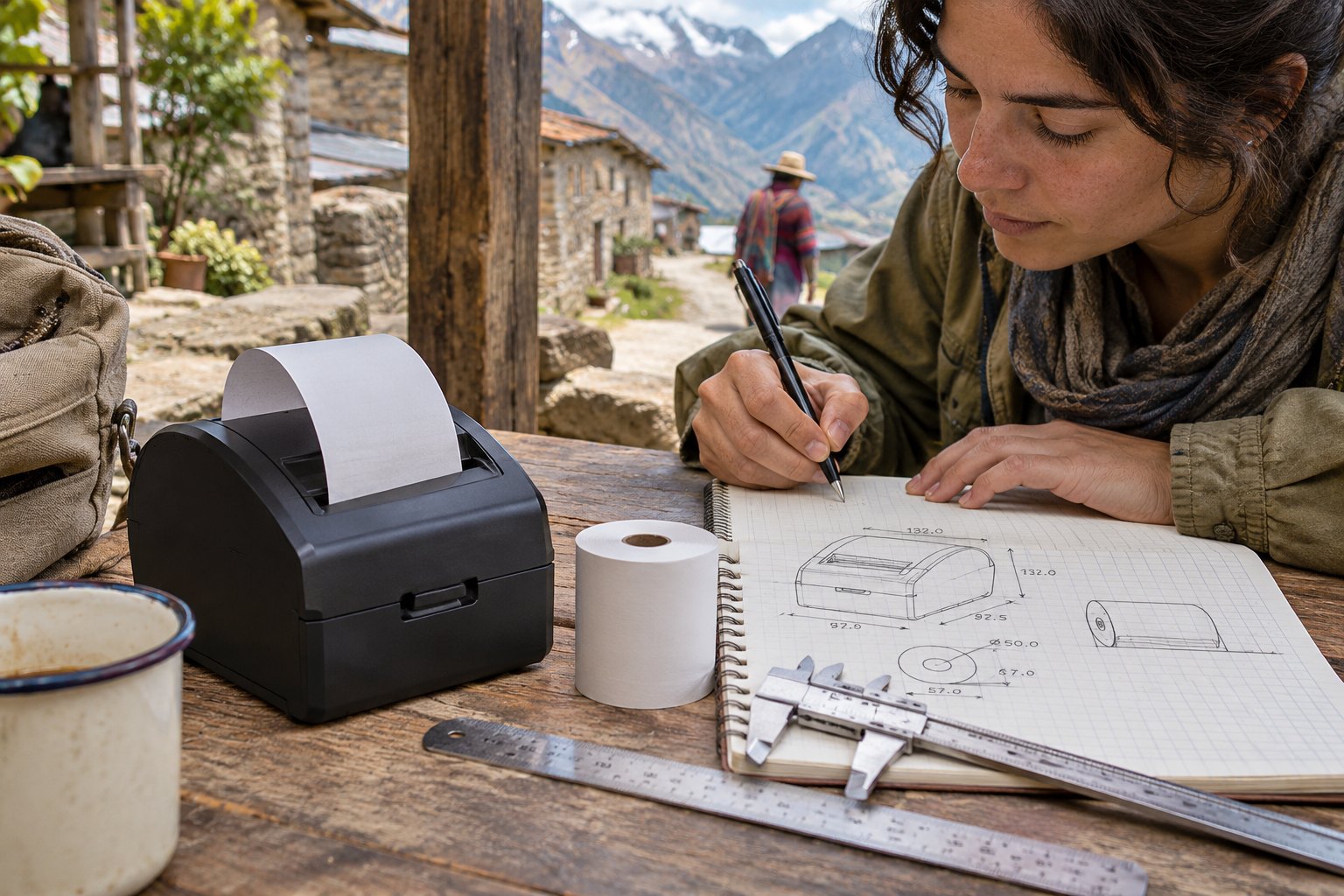
C++ development for embedded systems or performance-sensitive software starts with a budget for the work, expressed in measurements the target device can supply. A compact desktop label printer, for example, may accept requests from a point-of-sale system and prepare them while an operator changes a roll. The control surface and reports can be ordinary applications. The component that queues rows, holds device state and decides when a label can be completed has a narrower deadline and memory budget. Define that boundary before choosing how much of a larger product to implement in C++.
Describe the work the component must do at the busiest credible moment. For a label printer, the job may be to receive a batch at opening time, record which labels were completed, and recover cleanly when a roll is empty. User-interface responsiveness is a separate concern from the time for the first row to reach the device. Document how measurements connect to what operators experience. A component that processes a short synthetic queue rapidly can still stall when the connection is intermittent or when the operator sends the same order twice after an uncertain result.
List the possible deployment targets with representative inputs and measurements. A lab device usually has room to run detailed traces, whereas a field device may have less memory and be unable to keep a long diagnostic history. The build should make these differences visible. Start with actual limits once hardware is available and identify assumptions while prototyping. If a prototype uses a desktop fixture, its results can support early feedback on data shapes and state transitions. Verify device-specific allocations, connection timing and recovery on the field hardware before relying on its measured numbers.
Translate feature requests into observable budgets
Ask how large an order may be, how many pending orders can wait and when the caller needs an answer. An engineering team can then choose bounded capacities with an explicit response when the system runs out of room. Measure input size in decoded records as well as bytes. A large order containing many individually small labels can use more storage than a single large image after processing. Provide safe exercises for the expected order size and an intentionally larger test order, so stakeholders can see the difference between healthy backpressure and a lost request.
Establish which values describe an operating objective and which are compatibility promises. A target for the typical completion time belongs in a performance test, while a guaranteed maximum supported queue size belongs in the interface contract and capacity tests. Put the hardware, software build, workload and measurement range alongside the result. This will help the next team compare two releases measured after different device warm-up conditions. An operator should have a predictable response at a limit even when actual timing slows from load or changes in the surrounding system.
Separate engineering budgets for active processing and background housekeeping. For example, exporting diagnostics after the operator has resolved a jam should have bounded impact on label preparation. Give lower-priority tasks time and memory limits so that their work remains visible under the same peak-load test. When a budget proves unrealistic, show whether a smaller fixture or different user workflow can simplify the problem. Agree which product behaviour is required for launch and which optimisation can wait until the evidence identifies a user-visible effect.
Make ownership explicit at each boundary
For each object crossing a boundary, decide who owns it, who can read it and how long a reference can remain valid. If a label buffer is borrowed from a request parser, the consumer must finish before the parser reuses that memory. If the request queue retains records after the callback returns, it needs its own representation and lifetime. A lifetime diagram with parser, queue, renderer and device driver helps a team verify these decisions. In a capacity test, deliberately delay one stage while a new request arrives to demonstrate that an old record remains intact.
The C++ Core Guidelines describe principles for clear ownership and resource management, including resource acquisition tied to object lifetime. Use that approach to explain what happens when a device session ends or a lock is released. A session object can own a handle and close it when it goes out of scope. The application should still record whether the last operation completed, because releasing a handle and resolving a business operation are different decisions. Give the code a path for each concern and test their interaction during recovery.
Prefer a representation that makes borrowing visible and gives storage a clear owner. This may involve passing a view to a reader when the caller guarantees the lifetime of its backing memory. When the use can outlast the caller, use a suitable owned form with the storage cost captured in the budget. Record the convention in the boundary documentation so future code reviews can spot changes that move work to a different thread or queue. If a component stores a view for longer than it formerly did, its interface may need an ownership change as well.
Define who can change state and when
A label record can progress from queued to preparing, writing, completed or needs attention. Choose a single owner for each transition and tell other components how to observe progress. Expose enough context to know whether a printer accepted data or a complete label was confirmed by the best available signal. Those statuses can differ during a pause. If a hardware target cannot confirm physical completion, communicate the weaker evidence to the rest of the application and provide an operator action for ambiguous jobs. Avoid a success message whose meaning exceeds what the interface can establish.
State design also clarifies what can happen during shutdown. Ask whether the product finishes the current label, records a deferred job or prompts the operator to reconcile an uncertain print. State the answer for a planned application exit and for loss of power. Those paths may have very different evidence. Define which record fields persist and which can be recomputed. A recovery test can reopen the service on a replacement device and ask the operator to find the last known order, rather than checking only that the process starts again.
Give each state transition a reason and a measurable outcome. If the order moves to needs attention because a sensor reports a tray issue, the panel can present a simple prompt and the diagnostic record can hold a stable category. Use an order ID and an observation timestamp so reporting can correlate retries, operator actions and device sessions. Keep record sizes within the allocated capacity. Every extra diagnostic field should help someone resolve an actual decision, such as confirming which of two queued orders was handled before the roll was replaced.
Bound storage and choose safe ways to handle bursts
A constrained queue needs explicit watermarks. Consider a scenario where an upstream application creates requests for opening hours and returns an acknowledgement immediately. If the device already has a large job, the interface can report a supported temporary wait or refuse further work according to the agreed contract. Document how the caller knows which jobs were accepted. A test should combine near-capacity storage with a connection retry, since each of those conditions changes the number of records present. Record which data is retained during overload and which observations can be dropped without obscuring the order history.
Measure queue memory with realistic input data. A representation with a fixed number of slots can still allocate per record if individual values may grow. A representation with bounded record sizes can still exceed memory if several pipeline stages make copies at the busiest moment. Trace both the long-lived capacity and the temporary storage used during decoding and rendering. Measure the peak as a large batch moves through the stages. A low idle memory figure answers a separate question about baseline cost and can be recorded alongside the peak during the same exercise.
If the queue uses external storage, document how the component behaves when storage slows, fills or returns an error. A device may report the order as pending while it waits for storage, but only after the relevant contract distinguishes transient handling from durable acceptance. Show whether the caller can query the result before trying again. In a label workflow, another duplicate print may cause stock to be misidentified, so reliability includes the operator's ability to find the order and understand its state. Use synthetic products and identifiers in the recovery exercise.
Exercise edge cases under normal policies
Build fixtures of distinct shapes. Use a batch of uniformly short labels to check per-order bookkeeping, a small batch with the largest supported payload to measure temporary processing cost and a mixed batch with one unacceptable item to test entry-level status. Ensure each fixture has an expected outcome a reviewer can verify. For the mixed batch, for instance, the fixture should state whether the whole batch is refused or the valid labels proceed. This is a product decision that needs to be visible in both the interface specification and the device test results.
| Exercise | Collect | Acceptance observation |
|---|---|---|
| Busy opening period | Peak queue occupancy, memory and completion time | Every accepted record receives a visible final or deferred state |
| Roll runs out mid-order | Last confirmed label and recovery event | Operator can resume or flag uncertain output |
| Payload exceeds declared capacity | Caller response and subsequent normal request | Refusal is clear and the queue keeps working |
| Brief connection loss | Job identifier, reconnect and duplicate handling | Caller can establish recorded state before repeating work |
Build a harness that measures the normal entry point
The normal application boundary should be part of the test. Measuring a rendering function directly has value while investigating performance, but it misses input parsing, business decisions and calls that wait on the device. Create a representative test that begins through the same request path as an ordinary device connection and ends at a recorded state the caller can observe. Capture a time at each important boundary so an unexpected delay can be assigned to a stage. A repeatable harness also makes it possible to show why a proposed change improves one stage while the entire order still waits on a separate resource.
The CTest documentation describes how to run tests registered with CMake and control execution. If the project uses that build system, register fast device-independent tests and longer target tests with separate labels and clear prerequisites. Keep physical device tests tied to specific fixtures and provide a way to select the correct model, firmware and connection. Capture enough diagnostic output for investigation. If access to hardware is limited, run device-independent state and capacity cases routinely, then verify target-specific timing and interactions before releasing to that device family.
Use controlled comparisons for optimisation. Establish a reference result for a particular device and release build. Keep fixture size, order of work and connection conditions stable while comparing a change, and account for warm-up effects separately. Run enough trials to observe ordinary variation. Draw attention to the long tail when a few orders take substantially longer, because those are the events that generate operator intervention. Report the result in the same units a reviewer will use to compare the component's budget and the observed workload.
Keep lab fixtures and production observations comparable
Set a convention for versioning fixtures alongside tests. If the expected output changes because a product rule changes, the fixture update should explain the new result before someone reruns the test. For a label form, record an understandable example of making a date format explicit and updating how existing configured fields are interpreted. Compare against a known build with the same fixture to establish whether the old result is deliberate. That distinction matters when a dashboard shows a related change and the release manager needs to tell a rule update from a regression.
Decide whether field reports can carry a build identifier, device family and stable diagnostic outcome within the available storage. Provide a sample diagnostic export with sensitive order values replaced by synthetic identifiers. When an operator reports a stall, engineers can use the diagnostic category to pick a meaningful existing fixture or create one that reproduces the observed state. Record which properties of the field observation the fixture can mimic, such as job size or timing of an empty roll, and which require further evidence from the actual device.
Keep device-specific logic where it can be replaced and verified
The application's job model can stay consistent as device families vary in capability. A small interface can expose the distinctions that matter to the workflow, such as ready, waiting for supplies or outcome approaching uncertainty. Leave the calls to the device SDK and translation of its result paths in the device adapter. Avoid presenting capabilities as universal if only one model supports a particular detection or confirmation signal. A documented capability matrix and acceptance fixture allow an application to select a supported flow without carrying assumptions from the lab hardware to every installation.
Plan a deployable example as the first integration milestone. The team can supply a minimal label format, one workflow and a readout of supported device capabilities. Then run it on the intended hardware and demonstrate a way to recover from an empty roll. A stakeholder examining the demonstration should be able to reconcile the job ID printed by the host with the matching state after resume. This makes it easier to approve the adapter boundary before every device mode has been implemented.
Maintain a build matrix for the versions of compiler, libraries and device firmware that the project claims to support. Give each row a clear owner and tie it to a reproducible build or install artifact. Document cases in which two device families need different compile-time settings, and preserve the type of fixture used in the acceptance run. Review changes that grow memory or storage budgets across each supported target. A desktop trial can make general state behaviour easier to inspect while the target test reveals whether configuration-specific hardware callbacks preserve those states.
Exercise rollback with a known pending order
On a test device, install the proposed build while the work queue is empty, run representative fixtures, and record the expected fault recovery result. Later repeat with a supported pending order if the deployment process allows work in flight. If a rollback is needed, establish whether the older build can read queue records saved by the newer one and how it handles state it does not recognise. An upgrade plan needs an answer before real records are involved. Use documented fixtures to demonstrate preservation and supply a clearly labelled way to compare the observed results.
Work out how the operator knows when an update has finished and what to do when normal printing remains unavailable. A visible device version and simple diagnostics help support identify which release is installed. Design the rollback rehearsal so the team can check business records and device readiness from the ordinary operator view. If inspection depends on a maintenance command, make it an additional source of evidence reachable by the right support role. Giving operators a bounded action in the event of uncertainty helps avoid replacing valid supply, repeating entire jobs or assuming recovered output.
Review a delivery proposal by running the device workflow
Ask a prospective C++ team to describe one constrained workflow in executable terms. They should be able to explain the load fixture, memory limits, ownership decisions, device states and how the stakeholder can view results. Request a walkthrough on the intended device once available. Ask what they would measure if it becomes slow only during recovery or while applications send work at the top of the hour. The answer should say which observation will confirm the bottleneck and which tracer or log output can be retained within the device budget.
Agree the tests that need to remain after handover. For the printer, those could cover large jobs, queue saturation, empty-roll recovery, temporary connection loss and successful rollback. Include at least one case with interrupted work a support colleague can observe from an ordinary interface. Review which test code runs locally, which needs a device and who maintains fixtures as supported products change. Delivery leaves behind a reusable demonstration of where C++ contributes to measurable behaviour and what happens at the component boundary as the surrounding product changes.
Create an acceptance note with the limits the product currently supports, the measurements actually observed and the remaining device comparisons. Give each follow-up a relevant fixture and the conditions under which it is needed. The small device can have a stable normal path even while an unusual model remains unverified. That knowledge helps a release manager schedule the correct installation and helps support ask the right questions when a warehouse switches devices. Keep the same note tied to a build reference and a controlled set of test results so that future comparisons can be made consistently.
Identify which performance changes deserve another target run
Review allocations, copies and waiting points when code changes in the request path. Suppose a developer adds a rendered preview to the service response. Ask whether generating that preview requires another full copy of the label image, whether the preview can be computed after an order is recorded, and which supported device should be used to measure its cost. If the preview feature is optional, test both documented modes with the same workload. Comparing only the fast path can hide a new memory peak in the mode customers select from the ordinary operator interface.
Write a short incident exercise that can be rerun during maintenance. Give the tester three labels from distinct orders, complete the first, interrupt the second and send the third after restart. Ask them to associate physical output with the recorded states and demonstrate their available choices. Capture the relevant timings and memory occupancy as supplemental evidence. The exercise helps a team see that correctness during interrupted work is a deliverable with concrete evidence. It also gives a baseline if a future release changes how the queue records uncertain results.