

Account for the physical items travel operations actually control
ERP inventory management for a travel operation can cover guide equipment, headset kits, printed vouchers and other goods the business receives, stores, assigns, issues and returns. It answers a different operational question from checking whether an airline seat or supplier room can be bought. The physical inventory team can count and verify its own goods. The travel supplier remains authoritative for its sellable reservations. A trip order can connect the two workflows without treating one supplier booking as proof that the agency has packed equipment for travelers.
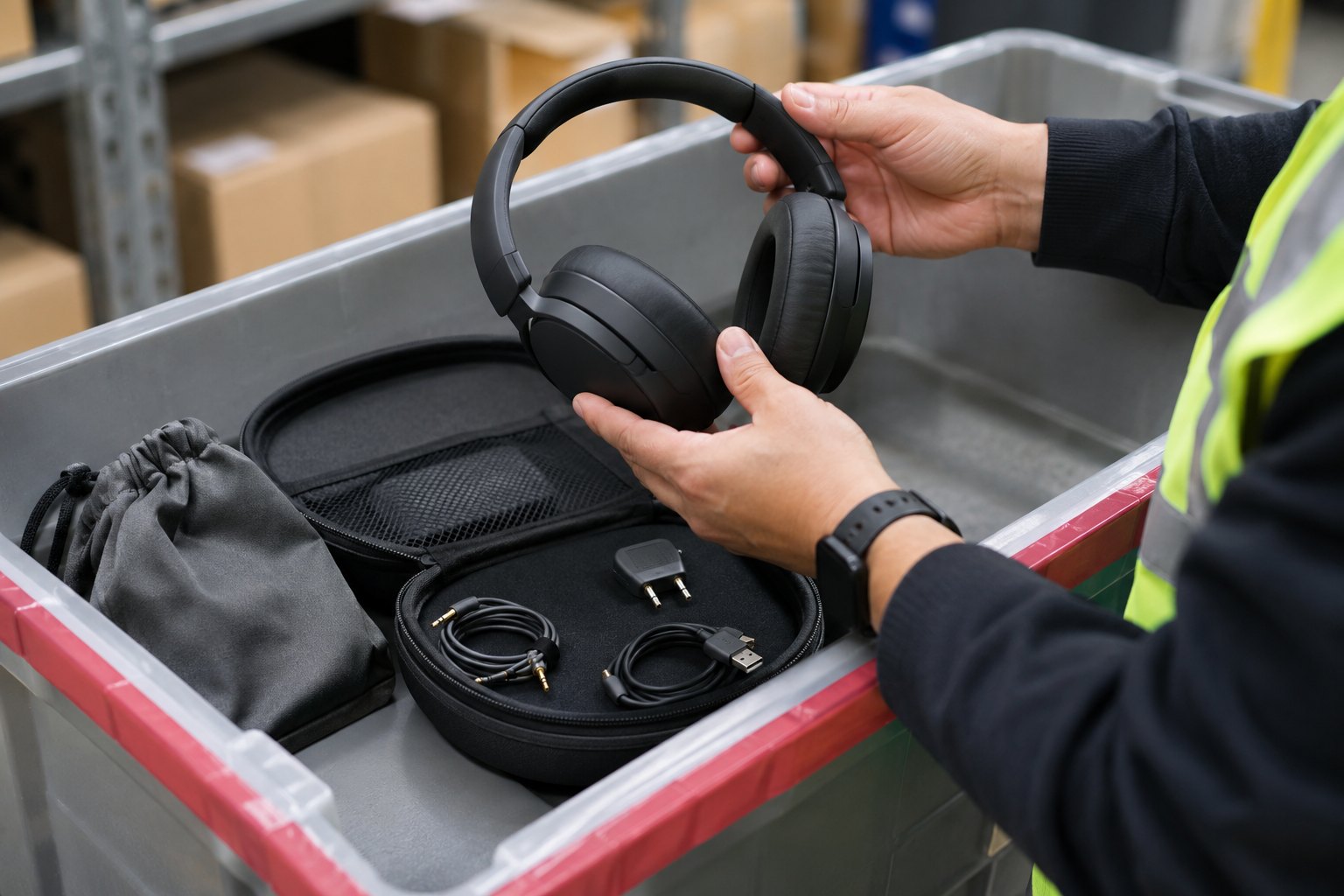
Consider fictional operator Northbank Tours. It keeps reusable headset kits and controlled printed vouchers in two depots. It begins one exercise with 48 headset kits physically present, 18 allocated to future work and four in quarantine. Assuming the categories are disjoint, 26 are available across both depots. Staff need to choose the correct location, record serials for kits issued to one departure and verify returned items before releasing them again. The same app needs evidence when it records physical voucher pads or serial ranges. Counts in this example are illustrative and belong to the fictional organization.
Choose the dimensions people actually handle
Define each item with a durable stock code and a unit. A sound kit can include a particular headset, adapter and container. Decide whether an item is serialized at kit level, whether an expensive component is tracked independently, and what the receipt and return teams can verify without slowing normal operations. A voucher book may instead be tracked by controlled serial ranges and counted as pages or complete books according to the workflow. Clarify how pack sizes are converted into the working unit. Fix those conversion rules before launching an importer that might count a case of ten as one item.
Storage dimensions can include depot, room or shelf and status. A head office screen can report 26 available overall. A route leaving the West depot only benefits from West capacity unless transfers can arrive on time. Preserve location at every movement. Microsoft’s Dynamics 365 on-hand inventory guide illustrates how stock totals can be displayed by product, storage and tracking dimensions. The useful dimensions for travel operations come from the responsible team’s work. A reporting view can group across both depots while a pick list demands correct location and status.
Record countable states and the events that change them
Name the meanings of on hand, allocated, picked, issued, in transit, returned and quarantined. An allocated item can be physically present while reserved for a particular departure. An issued kit is assigned to a person or trip and may be outside the depot’s on-hand balance. Quarantine prevents a kit being issued even if it is in the warehouse. A local policy may use another term for the same business function. The design should ensure that statuses presented as separate deductions are mutually exclusive for that calculation. Maintain a separate transition record explaining each reason and actor.
Track outstanding purchases separately from physically received goods. A purchase order that promises 20 more kits does not prove they are available at a particular depot now. An on-time received item may become available after inspection or verification. Set rules for partially received deliveries and identify the date expected for the balance. If some units do not qualify because the serials are unreadable or the adapter differs, record the receipt according to policy and hold the affected items separately. The buyer needs a supplier follow-up, while route planners should still see what can be issued to the upcoming departures.
Calculate capacity per depot and keep allocations explainable
Work the 48-kit opening balance
Northbank counts 30 kits physically in its East depot and 18 in West. East has 11 allocated and two quarantined. West has seven allocated and two quarantined. East availability is 17, and West availability is nine. The fleet can issue no more than the current available quantity at the departure depot without an approved reallocation or transfer. Recording the total as 26 is useful for planning. It is insufficient to accept a request for ten kits when time prevents delivery from East to West. A good interface makes the constraint visible with the work it affects.
If the East depot allocates six kits for fictional departure N-1422, East available falls from 17 to 11 even though 30 remain physically counted and two remain in quarantine. East’s allocated total rises to 17. The staff can now progress those six from reserved to picked and issued without reserving them again. Suppose the depot later issues all six. East physically present drops to 24, and the open allocated total drops to 11. With two still quarantined the remaining available quantity stays 11. These transitions show why a single stock field cannot explain both physical movement and existing demand.
Make the allocation specific enough to support a pick, without forcing premature assignment of serials where the operation uses interchangeable kits. Staff can allocate six units by approved type and depot, then bind the six serials during picking. If each traveler needs a particular device capability, represent that constraint during allocation. Require authorization for a substitution of item type or location. A replacement can release the first reserved unit and consume a permitted second one in a single traceable operation, without creating an unexplained extra item or unassigned shortfall for a later departure.
Protect the last available unit across several demand sources
An inventory count displayed to an operator is a snapshot. Two departments may try to reserve the same remaining kit while looking at the same screen. Define a single authoritative application for deciding which reservation is accepted, then check the current unit and location at the moment that decision is recorded. If the other request cannot be fulfilled, record a shortage with an authorized next action. Do not let a client treat its earlier available count as a guarantee. Handle a repeat submission of the same work request under a stable identifier, and test what a user sees after the first response is lost.
Microsoft’s Inventory Visibility reservations guide describes soft reservations and later offsets as an example of coordinating reservation availability with physical consumption. Verify the relevant version and behavior if a specific provider is in scope. For Northbank the inventory team needs an observable transition from allocated to issued and a clear rule for expiration before issue. An allocation that has already produced a physical movement requires a different return or correction workflow. A cleanup job may release stale allocations without silently returning an issued kit to a shelf.
Trace serialized issue, partial return and stock corrections
Capture a useful record at the departure desk
For N-1422, East staff pick and verify six specific kits. Store the departure identity, location, applicable reservation, quantity and serials. Include the issue time and the responsible operator or supervised handoff. The equipment log does not need a complete itinerary or passport detail. Give the departure lead a list of assigned serials for return and support. If a scanner reads a kit already assigned elsewhere, it should make that conflict clear before the team completes the issue. If one kit is missing, record the actual picked amount and a shortage, then apply only the permitted substitution or escalation.
Work through an interruption after scanning the first five kits. Staff reconnect and retrieve the recorded pick state before attempting to complete it. If five scans were durable, the sixth can be added according to the approved process. If the application allows scanning offline, keep the action pending until it verifies availability and ownership of each serial. If another operator has already issued one of the items to a different route, the stale local action cannot make the same kit belong to both. The queue should identify the specific conflict and give the depot owner a way to reconcile physical location and current assignment.
Inspect returned units before restoring availability
Suppose four of the six kits return to East. Three pass inspection and one goes into quarantine. The two still issued remain associated with N-1422 until the responsible owner verifies their whereabouts. East now has 28 physically present, 11 allocated to other work and three quarantined, so 14 are available. This is an increase of three in sellable working stock after the four arrivals were recorded. The example demonstrates why the count of packages received, count of equipment available and unresolved returns are different measures. Keep the condition report with the serial and relevant work reference.
If an inspection confirms that a kit can be restored, a later transition can release it from quarantine. Track that change with its actual time and owner. If the kit cannot be repaired, follow the approved inventory disposition process and remove it from the applicable physical quantity when that event is recorded. An unidentified accessory may require a small exception record while staff determine which kit it belongs to. Avoid making an uncertain item immediately available simply because it is present at the desk. Hold the subset in question and keep ordinary operations running with the verified goods.
| Recorded point | On hand | Allocated and quarantined | Available |
|---|---|---|---|
| Opening count | 30 | 11 allocated, 2 quarantined | 17 |
| Six allocated to N-1422 | 30 | 17 allocated, 2 quarantined | 11 |
| Six issued | 24 | 11 allocated, 2 quarantined | 11 |
| Four returned, one held for inspection | 28 | 11 allocated, 3 quarantined | 14 |
Control transfers, vouchers and reporting across both depots
Record who holds items while they move
A transfer between depots can satisfy a shortage if the arrival and inspection fit the actual departure timeline. Reserve the outgoing stock temporarily if that is the approved workflow, record dispatch from East, and record receipt at West as a separate event. Show in-transit quantity and the transfer reference while the items are between depots. They should not contribute to either depot’s available count during that interval. If only part of the transfer arrives, record the actual serials and keep an exception for the balance. A transit count can help locate goods without guessing they are already ready to issue.
A return can occur at a depot other than the one that issued the kit. Set a policy for which team can accept it and what evidence is required. The worker should be able to query the authorized serial, record condition and make the physical location accurate. The movement can remain pending if a working location requires further approval. Define which team closes the original departure issue and which verifies the new stock balance. Test a damaged kit returned at West after a missed scan at East. The correct current depot must remain visible even when some earlier events need review.
Use a distinct control for printed vouchers
Suppose Northbank receives a set of printed activity vouchers that can only be issued under the authorized supplier arrangement. Store the physical range and any expiration date or validation requirement. Give the voucher issue a unique recorded serial or authorized range tied to a departure. The physical paper’s presence can prove that a controlled booklet is in storage. It cannot prove current admission capacity or the supplier’s acceptance of a requested activity time. Keep the supplier booking’s accepted reference and status as separate evidence. If the paper must be voided, preserve its boundary in the serial history so the same number cannot return to issue accidentally.
When staff receive a partial booklet from the departure lead, record both used and returned voucher numbers under the supplier and operator’s policy. The organizer may retain approval evidence for a later supplier reconciliation. Build a procedure for damaged pages and missing numbers, with an owner and review status. A duplicate scan of the same voucher should show its actual current result rather than creating a second outstanding claim. Confirm serial-range behavior in a fixture where two providers use overlapping number formats. The relevant namespace can include supplier, document type and issued sequence.
Let a reviewer explain a stocktake discrepancy
Plan periodic checks by the location and product scope the stock owner can actually count. Capture what is physically present and compare it with the state at the physical count time. If stock moved while the count was in progress, reconcile the movement using authentic issue and transfer evidence. An adjustment should identify the person who performed the count, the checker and the stated reason. If only a subset of the depot was counted, mark that scope in the report. An apparent discrepancy may be a scanner label problem or a return awaiting inspection rather than a genuine stock loss.
Design exports to preserve distinct values for physically present, reserved, in transit, unresolved and available. A planner may want current route equipment counts. A warehouse supervisor may need evidence of returns due and the age of quarantine cases. A finance partner may need approved valuations and adjustments under its own reporting policy. Avoid drawing a financial conclusion from a dashboard total designed for equipment assignment. Write down the required source and timestamp for each reporting measure. Retain drill-down to the appropriate records so a reviewer can reconstruct a well-scoped stock count later.
Run a pilot with realistic departure and depot work
Start with a single item family and a small number of staff in both depots. Bring the opening 48-unit count into the test and rehearse the six-unit allocation, serial issue and four-unit return. Repeat the test with an interrupted scanning session and an attempted issue of a quarantined item. Verify which views show the right location and whether a worker can see how many items are unavailable due to existing commitments rather than damage. Staff should also identify how to recover a missing item and whether the system can carry that open exception into the next operating day.
Accept inventory and travel service status independently
Include a case where a supplier accepts 12 seats but the depot has only nine working kits. The transfer request or shortage workflow should stay visible without changing the supplier’s accepted control. Likewise a canceled tour may release kit allocations back to the pool under procedure while finance or sales still needs to check the supplier cancellation. Model the dependency deliberately, including who receives the message and what evidence is safe to share. A warehouse update cannot confirm an airline or activity reservation. A genuine change in traveler numbers may trigger an internal work order to revise the kit requirement.
Plot a staged rollout around the actual service calendar. A full season begins with accepted tours and item commitments already present. Verify opening reservations and serials against real depot counts using approved information. Have a staff member who did not perform the migration recreate the location totals from the acceptance evidence. Rehearse returning to a previous process while keeping the history of issued and transferred items. The physical count has to remain usable during a partial software outage. Give each depot a limited crisis procedure and reapply offline movements by their documented identity once the primary service resumes.
Measure the issues a depot can act on
Choose practical measures such as aged unresolved returns, time from receipt to availability, frequency of shortages at departure, and adjustments after stocktake. A rising mismatch can indicate poor scan coverage or incorrect status design. Review individual evidence before changing replacement or hold rules. The head office can track aggregate stock while depot staff see how verified items are distributed. Expand the rollout when a user can explain the physical, allocated and operational figures separately and connect them to the exact movement history, without conflating equipment stock with a supplier’s travel capacity.
Keep part replacement and serial movement in the same evidence trail
Test the situation where a returned kit passes an audio check but one replaceable adapter is missing. If the organization tracks the headset and case as a kit, it may hold the kit until the adapter returns or issue an approved replacement. A record should show which component was missing and how the business restored a complete unit. If the adapter has its own stock tracking, consuming a replacement should also create a movement from the relevant component inventory. Do not count a disassembled kit and each of its contents as available in two different pools. Reconcile components with the inventory policies the warehouse actually follows.
Verify what can happen when two staff scan the same physical return. The accepted movement should carry both the serial and the originating issue. A repeated request tied to the same issue can retrieve the already accepted return state. A second action claiming to return the same serial to a different depot is an exception that requires confirmation of its actual location. Provide the prior receipt to an authorized operator and expose the newly observed evidence separately. This helps the supervisor establish what happened before making an adjustment.
Reuse departure changes without counting everything twice
Suppose N-1422 leaves with five instead of six travelers eligible for a headset and the change arrives before the depot picks its equipment. Record the reduced requirement and release one unit under the current allocation. If a previous version of the trip roster arrives later, preserve its receipt or reject it under the documented ordering rule without reinstating the sixth request. Now repeat the scenario after the kits have already been issued. That requires a returned item or an authorized transfer of the extra kit. Simply reducing the planned quantity at that point cannot create new usable inventory in the store.
In an acceptance test, ask a trip coordinator to find the confirmed passenger count and a warehouse coordinator to find equipment allocations independently. Both can link to the same departure identity, and each needs a clear explanation for a mismatch. With a route that uses shared audio equipment across two departures, test which work order holds the item during each interval. A serial can be planned for later use if the organization accounts for its expected return without showing it available for immediate issue. The work record should make that timing and any dependency apparent to the planner.
Include these decisions in a rollout risk review. A departure is difficult to fix if every held item appears as issued or an expected return is counted twice. A narrow pilot can show where loading a barcode, editing a roster or reopening quarantine produces a different result than managers intended. Keep the corrected examples with the operators using the ERP after implementation.