
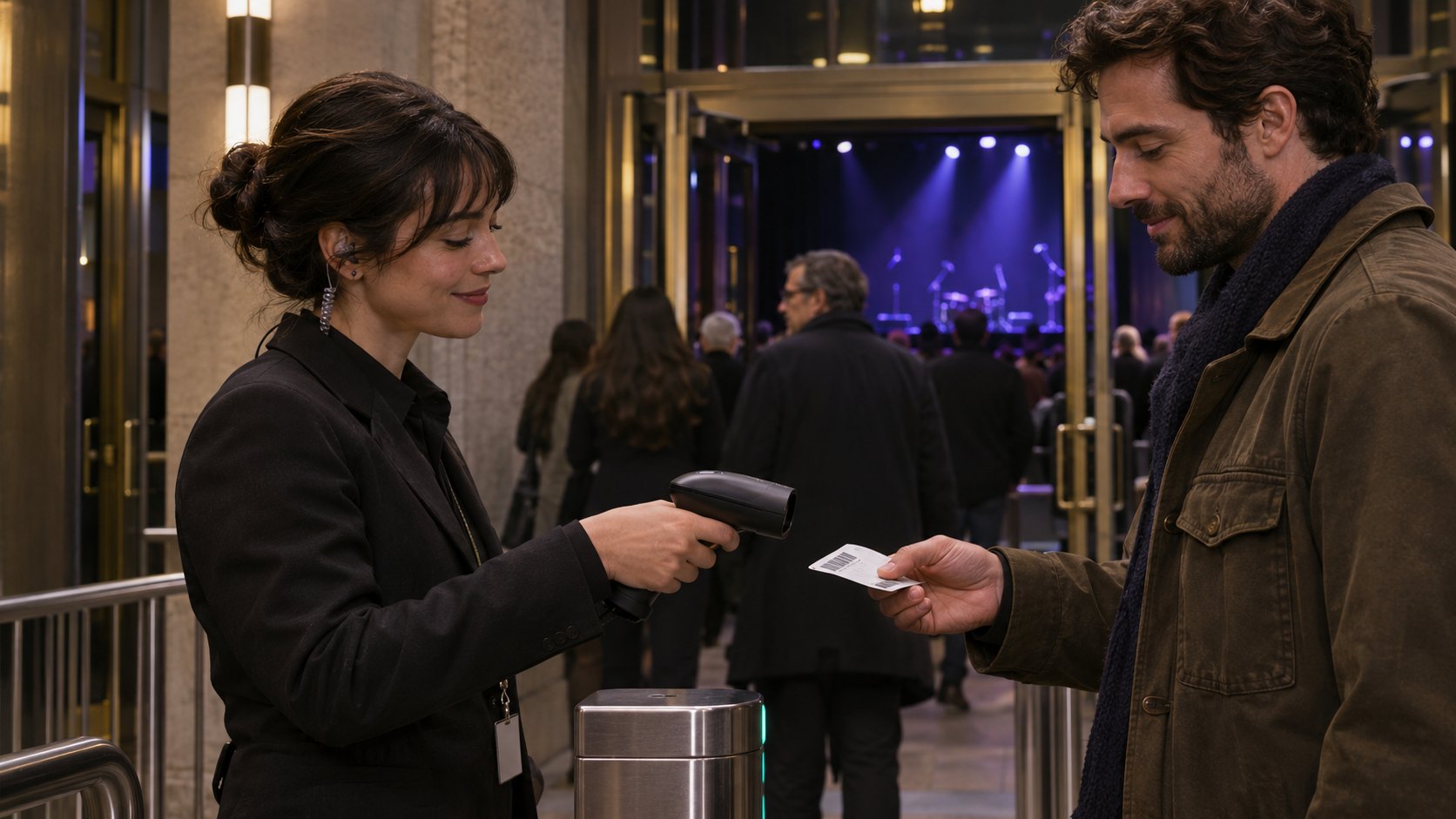
Design a ticket as evidence of an admission right
Event ticket booking mobile app development has to support the customer journey from offer to admission, including the operations that happen when an event sells out or the phone cannot connect at the gate. A paid order, a delivered ticket and a scan that authorized entry are different outcomes. The app should tell a customer which one occurred. The ticketing operator needs evidence to resolve a bad delivery, an order change or a scan rejected for an earlier use. Name the authoritative source for each state before drawing the event card.
This guide works through a fictional concert called Juniper Room. It has one performance with 160 sellable seats, four defined as accessibility-related spaces and companion combinations under the venue's own reviewed policy. The venue sells through one official ticket source. The customer app displays the offered seats, receives results from the purchase service and retrieves accepted tickets. The fixture focuses on ticket lifecycle, access rights and venue entry. Scheduling performers, managing production staff and creating an event program are separate operational products.
Seat groups, timed entry and sponsored passes can be represented differently. Begin by checking what the venue actually promises, who supplies the capacity and how an admission right ends. The event location, event time and access period should be visible in the accepted order, not reconstructed from a changing marketing page. Use the current supported venue policy for cancellations, exchanges, discounts and accessibility. The numeric values and business rules below are examples of a coherent pilot, not claims about the systems or permissions at any live venue.
Establish inventory and offer state before checkout
Keep an honest separation between displayed and committed capacity
For Juniper Room the layout publishes 160 initial sellable seat rights. In the working fixture 140 are issued when purchases open to a final group, four in an active checkout hold and 16 currently available. All 160 are accounted for by this deliberately simple state model. A mobile list retrieved seconds ago can show a seat that another person then holds. Keep search responsive, but ask the authoritative inventory service to confirm where an actual commitment begins. Where a source does not support holds, choose an approved flow that describes this honestly.
Seats have identifiers with a section, row and seat label as display metadata. Use stable identities for commitments even if display labels are edited. General admission works with capacity among an approved pool, but each issued pass can still own its individual evidence and validity. Accessible seating, staff holds, comps and sponsor allocations can change the counts and rules. Record the operator-approved availability to each sales channel without interpreting an informational seat map as permission to sell every visible space. A displayed seating group can have carefully defined purchase and companion behavior.
Describe hold duration and what a person can do if it ends. If the released quantity is immediately returned to inventory, update the customer consistently. If the outcome may remain unknown while a payment resolves, define when the operator may sell the same seat again. A link opening on a second device should find the accepted result or offer a fresh selection. It should not recreate the prior hold silently. In the fixture a person reviewing row C needs to know that they are reserving an actual seat or looking at options.
Ask the shopper to confirm the current offer
Keep currency, price breakdown, selected quantity, assigned seats and accepted event conditions together in the reviewed offer. An article might say that the venue opens at 18:30, while a qualified individual ticket says its entry window is 19:00 to 20:00. The buyer needs the correct commitment before approving payment. Preserve the accepted snapshot for support. Where the source updates time or seating details later, communicate changes based on current verified information. Do not hide a changed price or access window behind a general checkout button after a recheck.
Define ticket recipient identity according to actual requirements. Some tickets might have a holder distinct from the purchaser; another may admit any valid bearer unless resale restrictions apply. The app should not collect an ID for every user when the operator's process does not need it. Document which identifiers are required at entry and what the confirmation or wallet item can display. Consider how a person retrieves a ticket without granting optional notifications. Protect a ticket document or transfer action from going to an older signed-in account on a shared device.
Ask how the product handles accessibility of the seat chooser. A map that depends exclusively on pinch gestures can prevent a person from completing an otherwise supported purchase. Provide an accessible route based on seat identity and explanatory terms. Explain unavailable seats and support options. A disabled or unsuitable selection should have readable feedback instead of only changing fill color. Use screen-reader and large-text testing for the whole purchase and retrieval, with the actual names and venue states the app displays.
Record order, payment and fulfillment separately
Keep a checkout recoverable after interruption
Create an order intent with a stable identifier referencing the accepted hold and offer. Submit payments through the approved method, and define which source records authorization, capture, refusal or a required customer action. Returning from a bank screen doesn't prove payment. Switching to another app after approval doesn't prove failure. The customer can retrieve the operation from the current booking session after a disconnect. A support owner should have a way to see the same logical attempt without interpreting arbitrary phone events as the source of payment truth.
The Stripe Payment Intents guide describes a provider-specific payment life cycle and changes in state. Its webhook documentation covers asynchronous events. If the ticket service uses this provider, follow the current supported integration and authority for the account. Deduplicate applicable events and verify evidence before granting admission. Store an operator-facing relationship between venue order, approved payment attempt and issued ticket. Provider documentation cannot pick the venue's capture, cancellation or refund policy.
In the Juniper fixture, order JR-401 uses two of the four active hold rights at 48 fictional units per ticket and 6 units in agreed booking charges. The reviewed total is 102 units. At 14:32 the payment reaches the accepted state expected by the pilot, but the phone disconnects before it receives its confirmation. A backend process receives the inventory and issue result. On reopen, the customer retrieves the existing accepted result and finds the two tickets. If the issue process is still unresolved, the visible state should describe that, not ask the customer to purchase automatically again.
Separate a delivered format from the underlying right
After issuance, offer a supported delivery format. A user may receive a link, find the ticket under their account or add it to a supported wallet. Apple's Wallet developer guide gives current information about Wallet passes and how they are distributed or updated. A pass can carry readable event and ticket references. The venue needs an authoritative plan for validation and revocation separately. Do not assume delivery makes the token valid for every gate or that a previous pass always reflects a new event decision.
Show ticket state clearly and keep the private proof narrowly available. A receipt can identify the order and payment without containing a transferable admission code in every message. Make direct access sensitive to current ownership and policy. If a customer has an offline copy, define what it can show and whether the gate's approved process accepts it. A loyalty or reminder feature should not disclose a ticket another person controls after an authorized transfer. Record how evidence, contact and updated passes reach the intended account and how customer support resolves an old document.
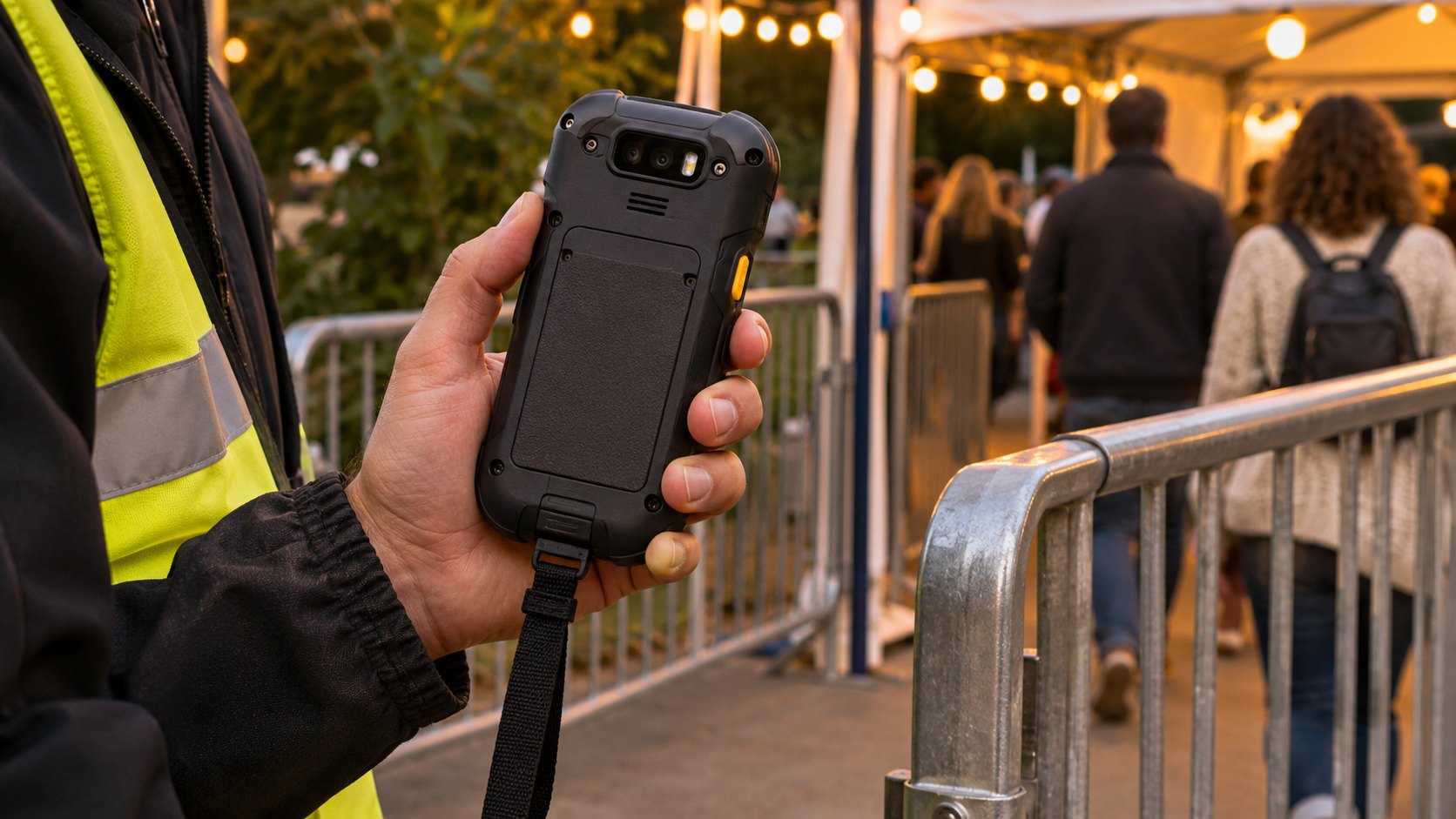
Test temporary loss of connectivity at the venue
Distinguish an observed scan from a committed admission
Assign an admission attempt to an authorized scanner or staff action. A request can say which ticket or proof was presented, the event and the result. A valid token can still be ineligible because it was used or revoked and an allowed gate may temporarily lack an updated record. When connectivity is available, serializing admission through an authoritative record can prevent two simultaneous attempts from both committing one ticket. Treat unknown outcomes as unresolved. A staff device should recheck the same attempt rather than display a new approval purely because a response didn't arrive.
Rehearse scanners G-2 and G-3 online for the same ticket. Both send a request in the controlled fixture at 19:12. The authoritative admission service accepts G-2 and records one entry. G-3 receives the agreed prior-use result and a helpful review route. Record time, seat ID and gate, and show only necessary values to the staff role. A person seeking help should not need to show their full purchase or account to an unrelated visitor at the gate. A defined dispute procedure can confirm the outcome without ignoring the earlier recorded use.
Offline behavior requires an explicit policy. Two isolated scanners cannot rely on immediate synchronization to agree on a global single use. One possible pilot design assigns specific, authorized ticket groups to one designated offline lane with a controlled local acceptance process. A stricter design routes all uncertain cases to a staffed online location. Choose according to actual venue, documented acceptance and support capacity. If multiple disconnected gates can accept the same ticket, the product cannot present the policy as strong one-entry enforcement while they remain independent.
Test what remains possible in degraded mode
Juniper's pilot uses a single designated resolution lane after a link failure. During the outage, general staff can see useful route guidance without receiving unrestricted ticket data. Ticket validation waits for the authorized process, and people know why the gate needs to refer them. A cleared or expired device should not claim to have the current offline rules. The supervisor can decide when to pause default entry under approved instructions. Reconnect scanners and inspect queued operations and any duplicates without allowing a temporary status to overwrite a later authoritative decision.
Plan a recovery procedure for staff under pressure. Use an approved short code or help contact and publish an alternate route the visitor can find. A smartphone brightness issue, damaged ticket display, or expired account should have a practical fallback subject to the venue's terms. Do not ask a visitor to submit extra personal evidence in front of others just because an automated scan failed. Test a representative range of approved ticket formats and main passage constraints. A scanner's visible feedback should say whether it recorded a new admission or simply received a retry.
| Event | Expected result | Record used to verify |
|---|---|---|
| Two seats from a current hold | 102-unit total accepted as reviewed | Offer and approved inventory operation |
| Mobile drops after checkout | One retrievable order, no duplicate charge | JR-401 and linked payment and issuance |
| Two online scanners | G-2 admits once, G-3 routes prior-use case | One accepted admission and second observed attempt |
| Gate connection fails | Staff routes uncertain cases as approved | Degraded mode decision and lane policy |
| Ownership changes before entry | New holder sees allowed proof | Ticket transfer result and revoked predecessor |
| A refund is requested | Request distinct from approved or completed payment return | Ticket status and financial event timeline |
Design ticket transfer, cancellation and refund records together
Only transfer the right the venue supports
When a venue allows transfers, agree on eligibility, recipient acceptance and revocation. The purchaser may see the pending operation while the new holder has yet to accept it. Record which event makes the transfer final. An old pass can remain on a handset after authority changed, so the gate needs the current validation method. Test transfer of one of the two JR-401 seats. Other purchased rights should stay distinct. A cancellation of that pending transfer should follow the approved venue policy and not create a second valid holder inadvertently.
Make support for canceled or rescheduled events accurate. Record the scope of the operator decision, affected tickets and timing. A blanket announcement can be delivered before every ticket has been materially reviewed. Inform customers when the business has made a decision, which action they can take and when the system will confirm it. Keep order history readable for an event whose current promotional page has been removed. Where an event changes seat map or time, the accepted outcome should record what was offered and why it changed.
Give refund statuses financial and ticket evidence
A refund can have request, approval and confirmed provider result as separate events. Determine how a returned amount affects the underlying admission right. A customer refunding one ticket from a two-ticket order should not lose the active second ticket under the fixture. The operator can review the original line, the approved amount and any accepted fee rules. If venue and payment event order can differ, model the temporary state and don't tell a person the ticket is accepted when the decision is unresolved. A refund failure should remain visible to its authorized owner.
Model the sale condition precisely for partial requests. In the fixture the original two admissions cost 96 fictional units plus 6 in booking charges. If the approved policy returns one 48-unit admission and no booking charge, the confirmed retained amount after it completes is 54 units. This example assumes that exact allowed calculation; real terms may differ. Receipt and operator evidence should show which amount was returned and which ticket was revoked. If support needs to reconcile a case, give an authorized role access to the relevant references instead of exposing the whole payment history.
Test revised policies for a reschedule independently from a normal voluntary cancellation. A customer may receive different approved options depending on accepted terms, event state and time. Show which options apply and let the person review them. Preserve the original promise and the later decision. A staff member seeing multiple old and new records should be able to distinguish an actual revoked admission from a pass that only failed to load on a phone. The event operator retains authority to accept or refuse entry under the approved process.
Prepare one release rehearsal with real devices and roles
Send the booking fixture through the whole journey
Test signed-in and, if supported, guest retrieval. An old app install should find the earlier order without asking someone to repurchase. Start with a slow connection before payment, then another lost response after accepted checkout. Route actual approval from the simulated provider to the ticketing service. Check that one receipt and two independent admission records appear. Test access from another account and an ordinary browser fallback. Make the test record describe what the customer saw, which operation was accepted, and how an agent can investigate discrepancies.
Rehearse venue entry on the actual handheld devices and connectivity design intended for use. Test an authorized scan, a concurrent second attempt, a canceled ticket, a pending transfer and a dark handset screen. Confirm readable notice for a person referred to support. Staff can record the exact case according to their role and monitor resolved problems separately from routine traffic. Review permissions and accessibility with the people performing entry work on the day. A reliable handoff is an operational readiness gate, not an engineering-only review.
Track latency and exceptions by stage. Time to issue a ticket is different from time to complete a sale. Distinguish requests that timed out from known duplicate admission attempts and from denied invalid tickets. Use a test resolver to report whose evidence caused a state change. When expanding to another venue, retest its scan and outage rules. Maintain a clear guarantee limited to the supported environment. A growing ticketing app should let the next operations team reproduce accepted outcomes without asking which label on a screen was supposed to mean success.
Confirm the customer has a supported route after the event
A buyer may look for an invoice after the event finishes, while the entry proof should no longer serve as an active admission right. Give each record its own lifecycle and expected visibility. A post-event support agent can investigate an access complaint under policy without making old ticket codes usable. Teach staff how to distinguish event ended, previously admitted and inaccessible account states. One retrieval route can serve familiar navigation while enforcing these independent decisions at the underlying service.
At handover prepare an evidence list with the issues a venue supervisor is likely to see. Check missed notifications, duplicate scanner requests and refunds still loading without prematurely changing the visible status. Review who can remove a ticket right and which customer communications follow. This prepares the project for an ordinary busy evening rather than a perfect sales demo. The strongest pilot result is that each role can explain its part of JR-401 accurately, from seat selection and money through the first and second scanner's different outcomes.
Review reconciliation across the three operating records
Give a finance reviewer the fixture's order and refund events without the entry log. Ask whether the total still reconciles independently. Then ask a venue supervisor to inspect the admission history without seeing account payment values they do not need. Support can coordinate those views through the associated order and ticket identifiers under the approved policy. This avoids putting unrelated personal information on every staff handset. It also reveals whether one ticket can be traced correctly after transfer without granting blanket account access to everyone at the venue.
Repeat the exercise when a scan is rejected as previously accepted. If the consequence of a second entry is significant, require a review record rather than allowing a generic administrator switch to erase the original event. Preserve who inspected the case and what approved action they chose. A manual exception may be necessary, but explain its scope and any follow-up needed. Do the rehearsal with the people who operate the review lane, not only with synthetic service clients used by engineering.
Before opening sales, give a support trainee a customer story from the rehearsal and see if they can identify the responsible workflow. A failed seat hold, money approved with no ticket yet, and a generated pass with expired access all start at different evidence. Clarify how the app gets the person to the right support route. These concrete tests say more about readiness than a screenshot of a successful scan.